The Architecture
A Sanctuary of Stillness, an architectural integration on the cliffs of Gamat Bay.
Architecture of Stillness
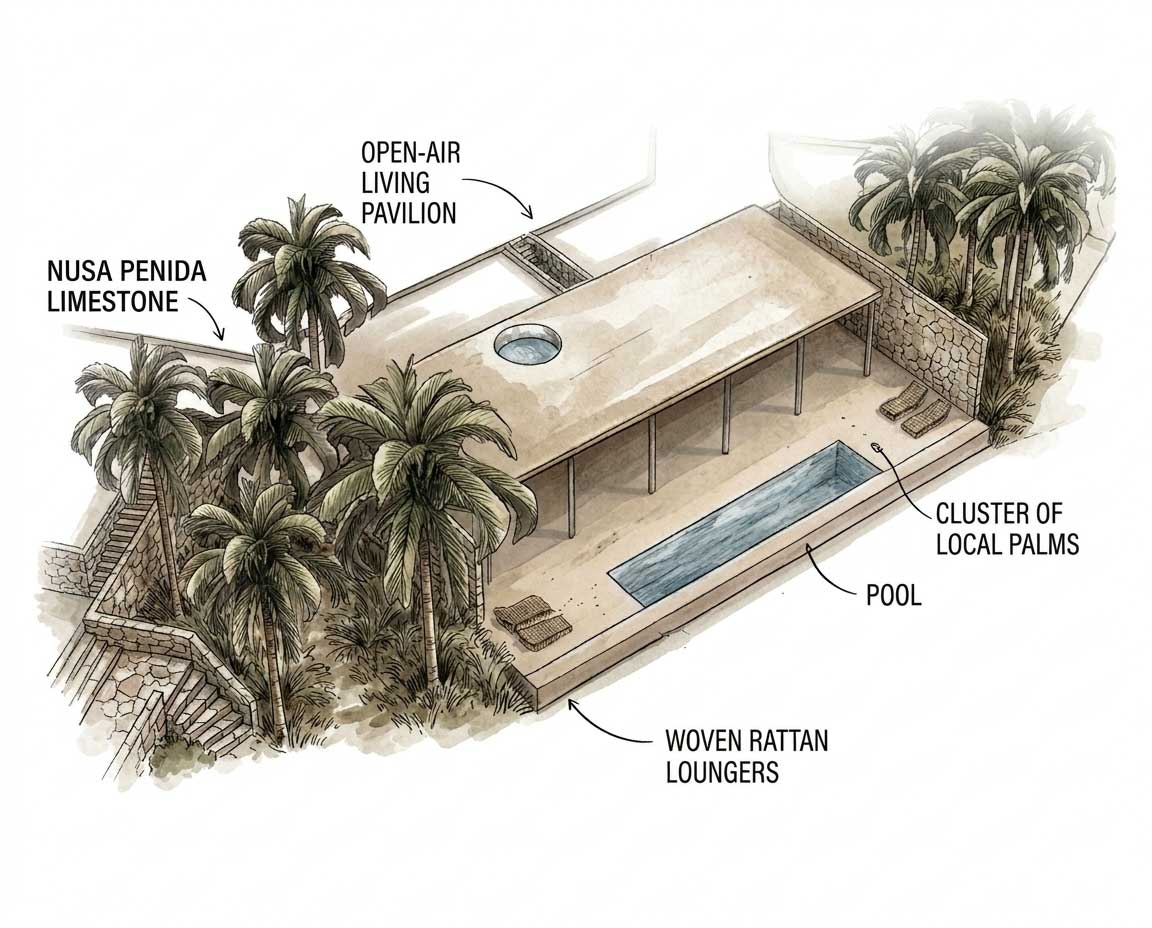
Nusa Penida is an island defined by its rugged limestone, a material that mirrors the landscape of South Bali and Uluwatu. At the Māua property, this local limestone is more than just a building material; it is a bridge to the island’s heritage, used to clad our exteriors and echo the ancient agricultural terraces found across the island.
From this vantage point, the world opens into an infinite horizon with the views of the Volcanic peaks of Mount Batur, Mount Agung, and, on the clearest days, the distant silhouette of Mount Rinjani in Lombok — creating a profound sense of grand stillness.
Landscape of Stillness
Modernism Carved into the Cliffside
The architecture of Māua is a masterclass in modernist restraint, brought to life by acclaimed French architect and architectural historian Pascal Mory. A graduate of prestigious institutions in Paris, Berlin, and New York, Mory is not merely a designer but a scholar of space and form.
His work at Māua is deeply inspired by the legendary Le Corbusier, the Swiss-French pioneer of modernism. As a recognized specialist in Le Corbusier’s work, Mory’s influence is seen in the property’s clean horizontal lines and the bold, rhythmic use of concrete. His expertise is so profound that he oversaw the full-scale reconstruction of an apartment from Le Corbusier’s Cité Radieuse at the Cité de l’Architecture et du Patrimoine in Paris.
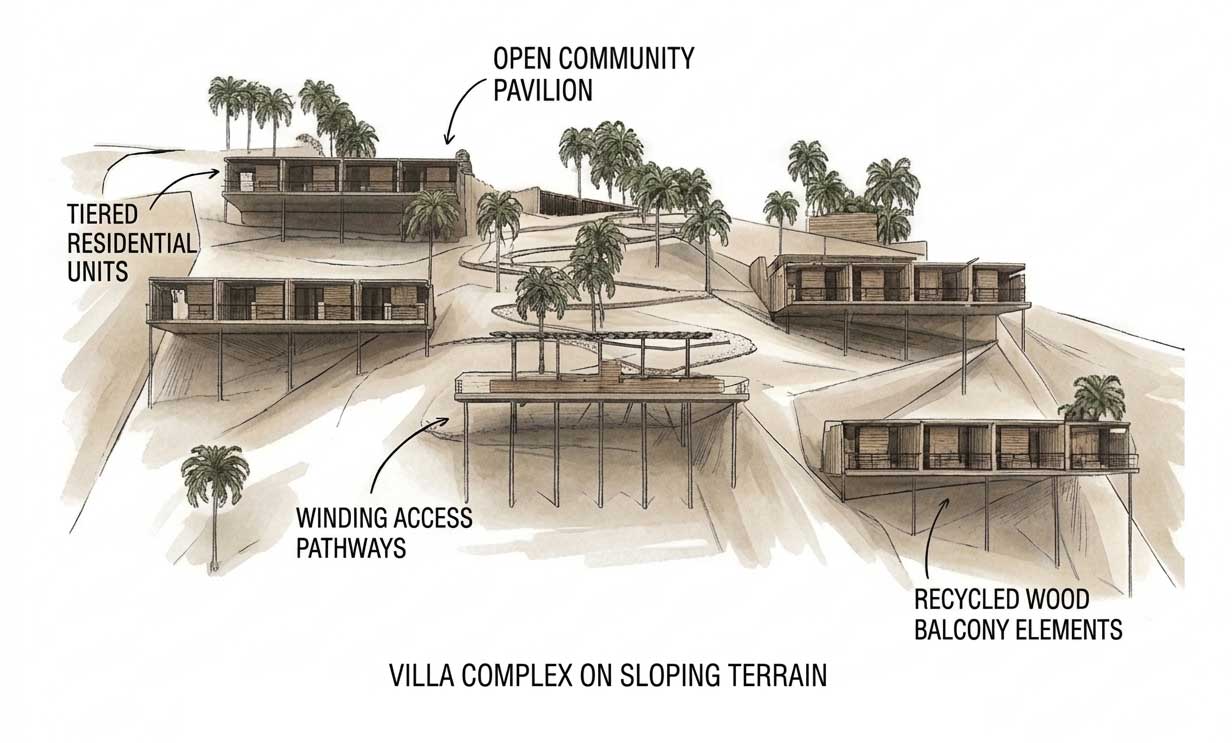
At Māua, Mory’s touch extends from the “skeletal strength” of the villas to the very furniture within them, having custom-designed the Ulin wood pieces to complement the structural geometry.
Co-founder of the “Gamat” project, Mory focuses on light and space as the primary building blocks of the guest experience.
A Sacred Simplicity
The Modernist Meets the Organic
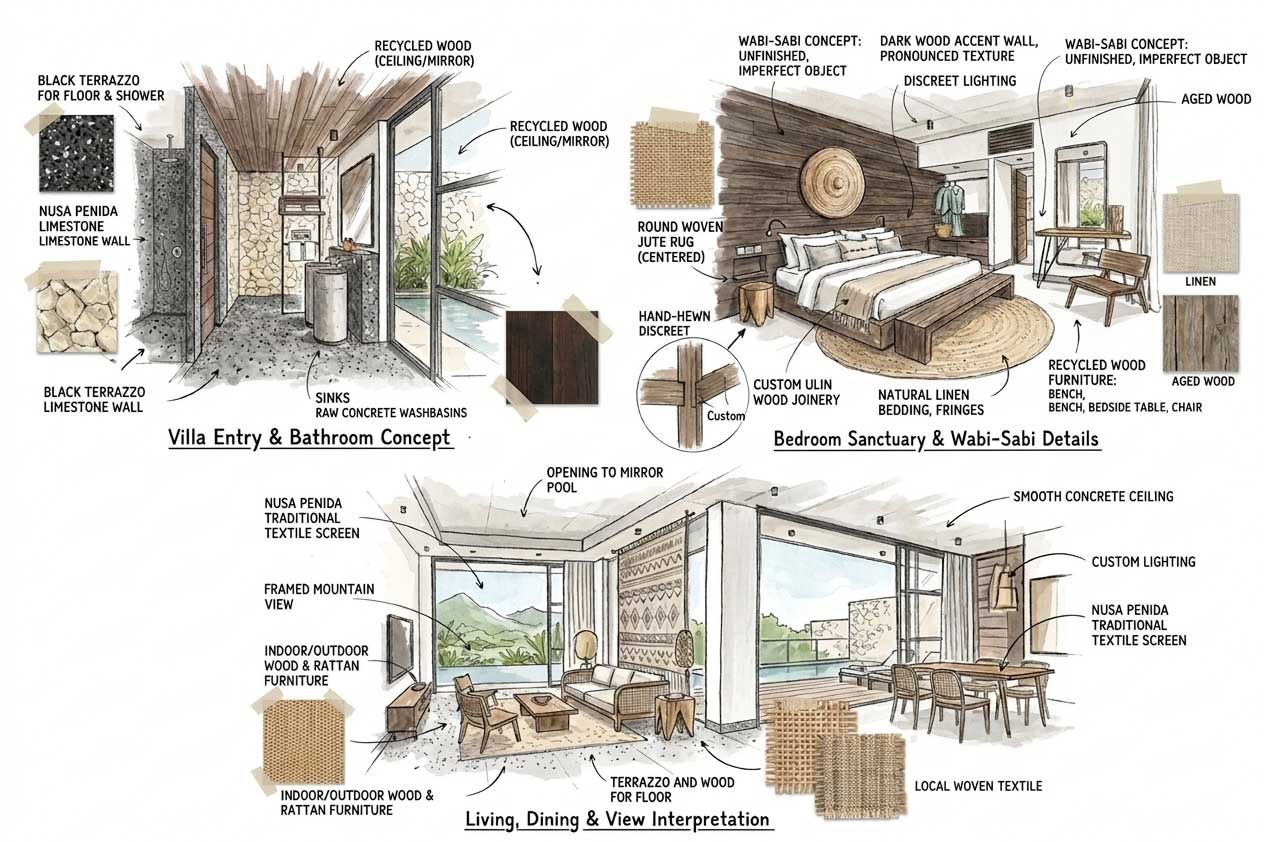
While Pascal Mory provided the structural bones, Estonian interior designer Geesi Leier infused the spirit. The result is an organic evolution where the home doesn’t compete with Nusa Penida, but slowly surrenders to it.
The interiors are “composed” rather than decorated, rooted in the Japanese wisdom of Wabi-Sabi. This philosophy honors three simple realities: nothing lasts, nothing is finished, and nothing is perfect.
Geesi curated a sanctuary of raw textures and quiet tones — where the grain of weathered wood, the cool touch of hand-poured concrete, and the natural fray of organic linens invite a slower pace of being.
Unrefined Luxury
Sourced locally, aged naturally
Raw Concrete
The Corbusier nod
Weathered Wood
The Wabi-Sabi touch
Local Limestone
The Nusa Penida soul